The Morning Shadows We Miss
On perspective, collaboration, and being a writer in the age of AI

I lived in this house for eight years and never noticed these morning shadows. It wasn’t until I started writing in the dining room that I saw them.
Change your perspective, change what you see.
Ask others what they see, and you’ll see something new.
As a writer, you keep those reminders at your core. It’s why writers need people.
Mentorship helps you start. Feedback keeps you humble. And readers keep you going. Through it all, staying human keeps it real. Writers create chemistry through shared humanity.
AI can’t replace writers, obviously.
Still, they’ll try and try. Still, we’ll keep writing.
A year ago, “I wrote AI Word Monsters Eating Us All.” I started the post with, “I’m not an AI expert, *top voice*, or anything like that, even on a purported level.” This year, I’m more confident talking about AI and more certain that we need everyone engaged in as many places as possible where decisions about AI use are being made. AI is only the monster we let it be.
I feel my stomach churn every time I hear another iteration of “If you don’t use AI, you’ll be replaced by someone who does.” Not because it’s wrong—AI-augmented workflows have already entered many workplaces—but because it instills fear. It’s framed as a threat and divides people into those kept and those let go. Get on board or get thrown off. Who doesn’t want to be a keeper when your livelihood depends on it, and others are depending on you to have it?
When people don’t feel safe to speak up, they usually don’t. They might even push themselves into performative optimism. Both are dangerous, especially together. With so many ethical issues at stake and almost no safeguards or regulations in place, we need people to bring up concerns as every group—from families and classrooms to large corporations and governmental institutions—makes AI-use decisions daily.
This post is the first of several in a new AI series. Like last year, I’m sharing to help build “regular people” discussions on figuring out what to do or how to think about all the changes. We need more people to know that they know something important and should be at the table and in the conversation where decisions are being made. We need some sliver of a counterbalance to the “guidance” often coming from people and places selling AI products or services or benefiting from them in other indirect ways.
The trouble with the name
“Artificial intelligence” is a provocative name for a futuristic field of research dating back to the 1950s. Artificial is fine. Accurate I’d say. But the “intelligence” part is the problem. Together, it becomes an absolute-sounding oxymoron, which sets it up as a divisive topic. A “thinking” thing without a soul also sounds horror movie-esque.
Conflict entrepreneurs love limited language like that because it’s easier to create questions with the purpose to divide: Are you for it or against it? An optimist or a pessimist? With them or with us?
But those binaries leave out the most critical questions: Optimist or pessimist of what? In what context? And crucially, from whose perspective? I’m trying to let go of any optimist/pessimist thinking anyway because it’s just a distraction, a futuristic binary often created by people who want us to forget our own agency, scaring or lulling us toward a future they want.
The trouble with ‘out of sight, out of mind’
A large language model (LLM) generates responses from patterns inside its black box of “training data” and presents them as if whatever’s in the mysterious box is all that’s known. How intelligent is that? Sure, we’re not born with object permanence, but develop it around eight months. For young infants, it’s out of sight, out of mind. But no one’s considering handing them the keys to run the world while they’re still clueless that things beyond their own field could exist.

Before object permanence is fully developed, babies may look shocked or surprised when you play peek-a-boo. (This cutie is my oldest son who’s about to turn 21.)
Not only does AI have an infantile sense of “knowing,” but using AI makes you feel like it’s trying to infantilize you too.
Infantilization is good and even perfect if you are in fact an infant. Caring for an infant is one of the most joyful simplicities in life: mirroring, reassuring, and coddling. All you have to do is give them what they want—babies cannot be spoiled. Your own self merges with them, not that different from when a baby grows inside you.
But soon, your child needs to start learning they are not the center of the universe; others have their own needs and are not here to cater and flatter you the way chatbots sycophantically do. And if your child is able to do something for themselves, then they should usually be the one doing it.
Don’t get me wrong: I’m not “anti-AI.”
AI is amazing at certain tasks. We’re drowning in data and AI can help. The speed it can sort and find is pretty fantastical, and I know that ages me because young people are not all that impressed by AI, at all.
But I’m not hurrah hurrah about it either.
AI can “read” and “fact-check” and concoct booklet answers and overviews or personalized plans and lists by skimming vast containers of data. That’s not nothing, especially when it appears to do it “for free,” hidden costs TBD. I guess we never completely mature out of an ‘out of sight out of mind’ mindset.
Regardless of the costs, the benefits of whatever AI gives you aren’t always as great as they might seem. AI will never know to look under the blanket and find any of the zillion aspects of life that were never digitally captured, or simply can’t be. Parts you see, and I see, and others see - and together we can see more fully. And AI itself is soulless (why does that obvious point feel needed?).
Feeling AI’ed out? You’re not alone.
Mental health aspects are another “cost” that should be considered alongside efficiencies. Spend too much time with AI and you might end up feeling more exhausted than usual.
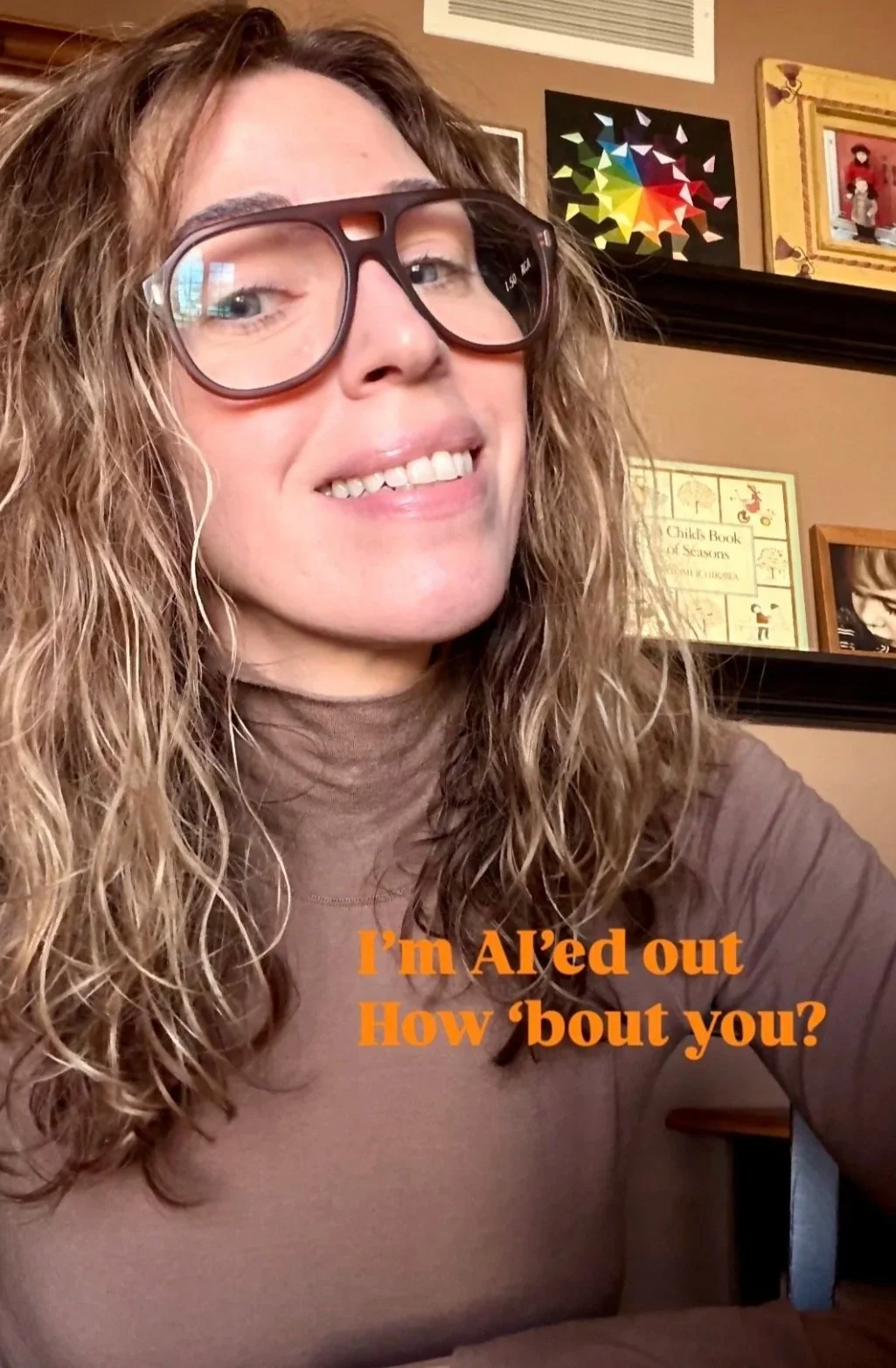
Me, exhausted. Editing and reviewing AI-generated documents, 10,000 words at a time, is way more work than people know.
Feeling AI’ed out? What if it’s part of your job and that part is growing or maybe even your whole job? Maybe you’ll like it? Lots would rather deal with an AI agent or “boss” than other humans. Many would prefer communication through an AI mediator. Some even want their own personal AI avatar, a digital clone, to handle the sometimes exhausting work of dealing with others and putting themselves "out there."
AI is literally stuck and might make you feel trapped too, forgetting that you can move and see something new, wander and daydream, and ask questions that aren’t only one-sided, rhetorical, or transactional.
We’re all kind of like experiments because no one can know the consequences of AI-use long-term. Many of us are entering this new experiment already worn down from the last one: social media.
Wanting something doesn’t make it good. But it does make it more likely to happen when that want also aligns with someone else’s profit.
The human side is typically the last thing considered when tech is involved. It’s also forgotten how that side has many viewpoints. Ask people around you? I’ve been very surprised by the range of feelings I hear. It’s far more complex than the all-in or all-anti broader conversations about AI.
Opinions seem age-influenced in opposite directions from past tech trends. It’s the young people more often sitting out. They think AI is for old people and corporations. It’s for people who wanna look like they’ve made something, they say, rather than true makers creating something good that they actually care about. Is it real, or AI wannabe? They can spot it right away. We sometimes worry too much about how impressionable young people are and not enough older ones.
What I hear from young people is so at odds with what I see and hear in my work worlds. We need more people engaging and questioning what’s being rolled in before a flattened landscape looks familiar to only those within it. Engaging doesn’t have to mean using, but everyone should be talking together.
Some people will adapt to AI-integrated work environments more easily because it meshes with their disposition or place in life. Others won’t, though they might feel so much pressure to be on board no one else might know. Whether you adapt easily or not, people who struggle have insight to help keep the group from adapting to something that maybe they shouldn’t be adapting to. Human connections matter. Efficiency is not everything. And all voices should be heard.
The real secret to human intelligence is when we combine it—two heads are better than one. It can be messy, frustrating, and like drudging through sludge. Working with real people is not always easy, but learning to do so is essential. We need each other. We can build real chemistry, meaning the back-and-forth kind that’s grounded in our shared flesh-and-blood vulnerability. You cannot get that magic with a machine.
Up close, most issues are gray and blurry, containing multiple, impossible-to-see sides that change depending on where you stand. Over time, issues look different, even when your ethics and values haven’t changed. And the older you get, the more receipts you have in hand, though you might not notice them unless you stop to look, or someone nearby asks you, “Hey, whatcha holding?”
Perspectives aren’t just our own, and even our own can change. This shapes what we see, how we process it, what we trust, and what we might miss.
You can live in the same house for eight years and not notice something that a visitor might see on their very first visit.
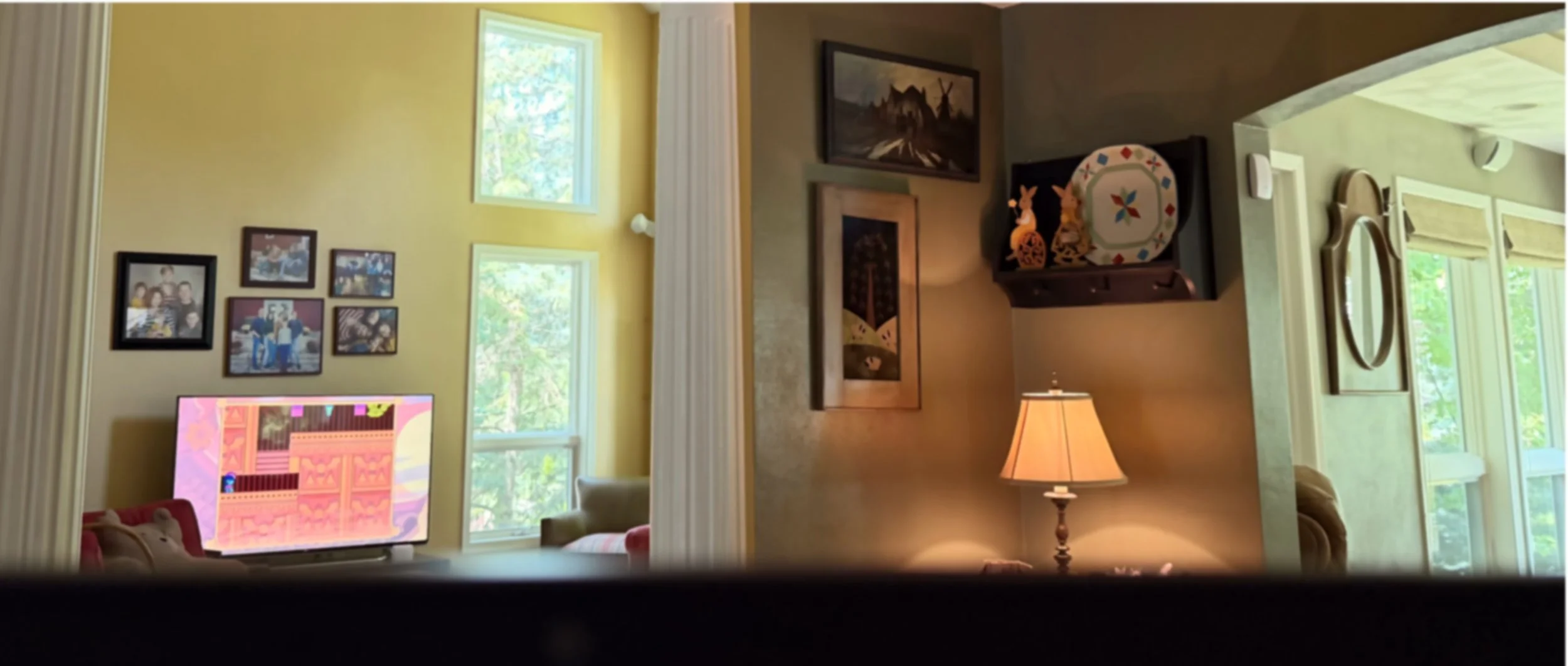
My usual writing spot perched at the kitchen table, often overlooking kids playing video games. I always prefer when they're on the same screen, sharing the same view.
Human-centered writing in the age of AI
It’s 4:51 am and I’m the only one up but the birds. Writing has a strong solitary side and AI can easily deepen isolation, even as much as ever.
Most of us aren’t seeing the same morning shadows. Our places and situations are also different. So of course writers have different stances, practices, and takes on AI, with different levels of options and choice. All of those might vary for you depending on the context.
I work in healthcare and am a medical writer and like writing memoir-style essays and now a book. Each context is so different. But I do have some general thoughts on how to keep writing human-centered. I’m sharing them here because I like hearing how other writers are figuring it out too so we can learn from each other and feel less alone.
Writers Should Write What AI Can’t.
Now is the time to dig deeper into curiosities and tell stories less told. Collaborate widely, interview primary sources (people! not only experts or well-known ones), and get out into the world to notice, listen, and talk with whoever you meet. If mediocre will do, things that can be written or sped up by AI generally will, especially since it’s far faster and cheaper than even a low-paid, experienced human writer (and oftentimes there’s not even a budget for that).
But realizations of AI’s limits are setting in. Quality costs. So does cleaning up slop.
I don’t use AI for brainstorming, writing first drafts, or final review. Using AI early in the writing process gives AI the steering wheel and power to pick the direction (maybe without you even realizing). It’s more useful in speeding up the sausage-making middle. If anything, an LLM’s direction early on might be useful in deciding where not to go—the same way I Google a topic to avoid drafting a rehash of what’s already been written. Then you can ask yourself and others: How can I (or we) do it better or different? What angles or gaps are missing?
Don’t Hide AI Use.
If you share information or images that came from AI, disclose that. If you use any AI writing tools, disclose what and how (as best you can), and update your disclosures if they change. Transparency is incredibly important especially when trust is low. It matters even if information sharing might seem too casual for those formalities. Everyone with a Substack or social following is media. We’re all influencers too.
You can find my writing disclosures on my About page. I also welcome questions on where any info or ideas come from, and am always open to new perspectives and differing thoughts.
Don’t blame freelancers.
Freelancing is hard. People are juggling other jobs and the pay is inconsistent and often less than minimum wage, especially when you factor in all the time. A lot of freelancers are caregivers or have limited paid work options. Besides, freelancers aren’t the decision-makers for the outlets they write for, and most outlets are just trying to stay afloat. (AI is not the only reason for all of that.)
Lots of people are still figuring out what to do. So am I. If I take a project that uses AI-generated content, I want to know about their internal LLMs, processes, and editorial standards. Does the use make sense for the context and type of content? Are they paying me and giving me the time to fully fact-check it and fill in any important gaps?
I don’t want to be a rubber stamper or use AI-generated content in manipulative ways (personal stories and essays should be written by people). I don’t write what I wouldn’t say to a friend or loved one or repeat something that feels wrong. And I don’t use sources I wouldn’t trust personally or use them inappropriately or without crediting. Being technically accurate is never enough if the information contextually misleads, nuances that LLMs often miss.
I walk away from anything I don’t feel comfortable with and speak up too, knowing many freelancers aren’t in a position to do either. But in the end it won’t matter much what any of us decide to do. Getting engaged wherever broader AI use and implementation decisions are being made is really important (right now!).
Support and Mentor Writers.
I started freelancing in 2021. Amy Cuevas Schroeder was so kind to follow up on my pitch and work with a new and nervous writer. Amy spent a whole hour on the phone with me before I even wrote anything.
I was really uncertain about the whole thing. Really, me? I could write something someone I don’t know might want to read? Plus, aside from a LinkedIn profile pic, I’d never even posted a photo of myself online much less a thought. But I felt like I was dying inside with stories that needed to come out—some people get this and some don’t, but if you know you know.
I learned journalism basics by working with Amy (she is a fantastic thinker and communicator).
🌟Writers need human feedback: Having another set of eyes is more valuable than any pass through an editing tool.
🌟We need diversity of views, experiences, and backgrounds: To get differing perspectives, we need a diverse workforce of writers to provide them. Supporting new and varied voices is essential, and something we all can do.
🌟Writers need humility. Keep me honest. What did I miss or get wrong? What’s unclear or might come across in an unhelpful way? What’s something you know that I don’t (but maybe think I did)?
Amy is an elder example building community and supporting women during midlife, a critical life phase for them as well as their families and whole communities. When women thrive, everyone does. Do you subscribe to The Midst? Did you read her latest, AI: Damned if you do, damned if you don’t? Amy’s gearing up for another Mastermind cohort, a structured program for women 40+ building their own businesses. I think writers are natural entrepreneurs!
More people are self-publishing and freelance opportunities are down. If I were starting today it’d be even harder to find those early learning opportunities. Now’s a great time to mentor new writers and team up with more experienced ones, maybe edit each other’s work. It’s also a good time to think more expansively about writing and ways to use the skills to find or create opportunities that might work for the market and moment we’re in.
Let's give each other grace and extend it to anyone sharing in the common good, with a motive to tend and befriend. It’s ok to feel uncertain, not know, or change your mind. There are lots of us.
Here’s to new sunrises and shadows yet to be seen. I especially love watching the two dance together.
Next up in this series (more in the elder series is also on its way), I’ll get into how I’m trying to turn my own AI anxiety into agency and AI concern into action as LLMs rapidly integrate into daily lives and workplaces.

It’s been a few months since the sun set before 8:00. I remember older people noticing small shifts in light like it was a big deal. I get it now.
A few AI reads
The AI Judgement Penalty by Code For Good Now: “Fewer women using these tools means fewer women’s perspectives, experiences and needs reflected in what AI produces, and in how it evolves. We are not just talking about who benefits from AI. We are talking about what AI becomes.” - Zehra Chatoo, Founder, Code For Good Now. It’s not only bias in the training data. AI use itself is susceptible to bias. Depressing yes. Surprising no. A reminder to me of one more reason to be engaged.
Teens Are Pushing Back on AI—and They Have Good Reasons by Wendy Wisner. Good explainer why. Wendy’s a great writer. I’m seeing the same thing in my circles.
AI Governance at a Crossroads: America’s AI Action Plan and its Impact on Businesses by Edmond & Lily Safra Center for Ethics research team, Harvard University: “As the federal government shifts from prescriptive regulation to “light-touch” governance and state-level legislators are incentivized to move in a similar direction, the responsibility increasingly falls to the private sector to establish and maintain its own standards of governance as they are not able to rely on governments to provide effective risk-management frameworks.” If everyone’s on their own deciding what to do, then we need everyone to be part of oversight.
Hundreds of Artists Ask NYC Mayor to Ban AI in Schools by Isa Farfan: Whether you have school-aged kids or not, we all can have a voice over how our local schools use (or don’t use) AI.
Don’t be scared about AI. Learn about it, even if you don’t use it.
I’m not drawn to learning about machines the same way I’m drawn to people, health science, and writing. But I think it’s really important for as many people as possible to understand the basics of LLMs to be fluent enough to be in the conversation. Decisions are happening everywhere. You deserve a seat at the table too.
A mysterious black box gives AI more power than it deserves and the people developing it less accountability. In general, tech workers and developers are assumed to be “smarter” in ways that aren’t true. They don’t know everything and shouldn’t be making decisions without insight and oversight from others.
This Stanford lecture is dated (from 2024) but explains the basics of how LLMs are built.
I also think there’s a huge myth that only certain types have the right smarts to enter tech fields, and the rest of us can at most become proficient users. The consequences of that longstanding myth just keep getting bigger, as tech becomes more immersed in nearly every aspect of life.