Shadows, Sunsets, and the Writing Spirit
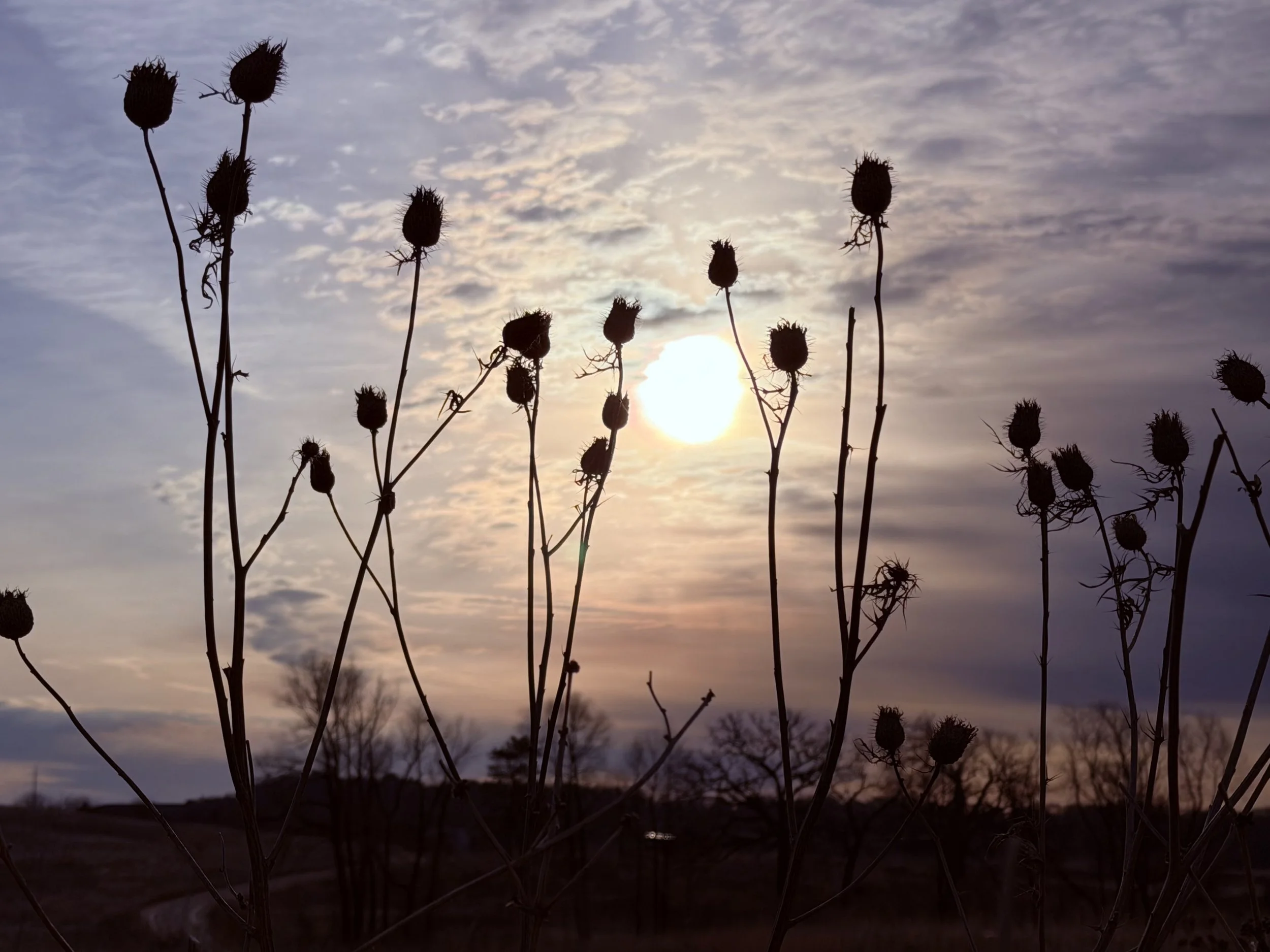
I lived in this house for eight years and never noticed these morning shadows. It wasn’t until I started writing in the dining room that I saw them.
Change your perspective, change what you see.
Ask others what they see, and you’ll see something new.
As a writer, you keep those reminders at your core. It’s why writing is a collaborative process.
🌟Writers need mentors and feedback from real people with differing perspectives.
🌟Editorial layers are key when accuracy and trust matter.
🌟Humility is essential: Keep me honest. What did I miss or get wrong? What’s unclear or might come across in an unhelpful way?
AI cannot replace writers, obviously. It can’t move to see something new. Or go and ask someone what they see. And it can’t draw from the zillion aspects of life that were never digitally captured or can’t be. Even today, most everything in life is never recorded or shared online.
AI can “write” from its blackbox with a certainty that’s all there is. And it can “read” or “fact-check” content from that same composite, “all-knowing” POV.
The more I see AI, the more I realize how amazing humans are, but also just how much we need each other to see what we would otherwise miss.
The writer’s spirit: entertaining, evolving, essential
Below is an excerpt from Celebrating the Writing Spirit (Three Years In) originally published on my Substack last February.
Writers are thinkers and organizers, collaborators and collectors, diligent documenters and community builders too. We stir up trouble or suspense, draw attention in for fun, and give it all back and then some.
Writers help heal and coalesce kindness, warming hearts and minds. We help grow understanding, drawing connections across boundaries, generations, and zones of time. We entertain and inspire, planting seeds that spout fast or grow slowly with time.
Writers are woven into shared living and faithful believing. We’re organizers of words and thoughts with ideas all our own. Writers, in fact, are the backbone of every discovery and discipline in history—for endeavors most practical and purposeful, as well as those deliciously not.
It’s also true that writers are often dismissed as daydreamers or time-wasters, discounted and underpaid (or never paid), with their labor taken for granted. No one really sees the toil and time. No one really knows the skills and crafts, all hard-earned. Our words get passed on and eaten up, shifting brains and moods in ways that can never be fully counted or seen.
AI can shuffle words around, whip up summaries of what’s already been said, and construct data-filled documents at lightning speed. I say, if it wants to do the tedious—hallelujah. My medical writing freelance work has wholly changed this past year: writing alongside AI or fixing, directing, and coordinating it (workflows TBD—everyone’s still figuring it out). Whatever alchemy of tools used in a workflow, you’re still responsible for the final product in the same ways as before.
But being able to write doesn’t make AI a writer. AI can’t do what it can’t do, and it doesn’t know all that’s known in even a single human life.
AI-generated output is laughable straight up. The content will keep improving, intentionally with human training, but no matter: AI will never be a practitioner in life.
AI can’t replace your writing voice or mine because it only creates from a digitally captured past and doesn’t have the hardware of a human life (silly to say but obvious things often need reminding). It can’t draw on histories that never were digitized or documented, and can’t access experiences that can’t be stored in pixelated form. AI also can’t orchestrate real discussions or conduct poignant interviews that flow from trust and human-to-human exchange.
At its best, AI can be like a college kid who crammed for days in a dorm but never applied any of the information in the real-world where real understanding grows. Though, it’s like thousands of them which is impressive, but still limited by the type of knowledge and lack of hands-on experience.
Or AI can be like an overly efficient subservient assistant, too eager to please and praise (annoyingly so)—which is why AI with a female face or voice is the creepiest thing, in Stepford Wives territory. I prefer calling AI “it” and it having no face or name whatsoever. (And want my kids to learn how to think, play, and interact before spending time with anything AI.)
The most important lessons can only be lived and learned surrounded by life in community. Human connection is everything.
Don’t you consider who authored something before deciding if you’re interested in reading—are they real, and are they for real? What’s their connection to what they’re writing? And does their writing sound like it’s actually coming from them? Those things matter, don’t they? Maybe not for a training manual, but for things you want to read, or any type of creative or crafted content.
Real voices change, constantly. AI can only capture a past composite “voice” that’s already passé. Isn’t your writer’s voice evolving year after year, even day-to-day? Wouldn’t you keep tweaking a draft, day after day, because your today self is different from yesterday’s?